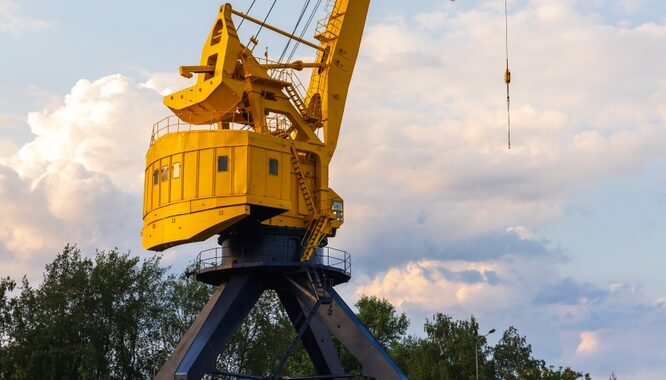
The appeal of Appeals of – Konecranes Nuclear Equipment & Services, LLC, ASBCA 62797, 2024 WL 2698011 (May 7, 2024) raises interesting, but important, issues that should be considered. In this case, the government (in a supply contract) procured four portal cranes from the claimant. After an initial test of one of the cranes failed, the government refused to accept delivery even after the issue was addressed by the claimant. The government did not accept the manner in which the claimant addressed the issue and would only accept cranes if the claimant employed “an unnecessary alternative solution [that] caused further delay and increased [claimant’s] costs.” On appeal, it was determined the government’s decision to delay delivery based on its demand for the alternative solution was not justified, i.e., constituted a breach of contract. Below are five issues of consideration in government contracting, or, for that matter, any contracting.
Issue #1- Patently Ambiguous Specifications
The government argued that the specifications were patently ambiguous and because the claimant failed to inquire regarding the ambiguous specifications prior to performance, its interpretation of the ambiguous specifications should govern. The contractor countered that the specifications were unambiguous and it met the specifications.
“Contract interpretation begins with the language of the written agreement.” If unambiguous, the plain meaning of a contract controls. “A contract term is unambiguous if there is only one reasonable interpretation.” However, “[w]hen a contract is susceptible to more than one reasonable interpretation, it contains an ambiguity.” “‘To show an ambiguity it is not enough that the parties differ in their respective interpretations of a contract term,’ rather, both interpretations must be reasonable.” To show a patent ambiguity, which we construe against the non-drafting party, the drafting party must show an ““obvious, gross, [or] glaring” ambiguity so substantial as to impose a “duty to inquire” before contract formation.
Appeals of – Konecranes, supra (internal citations omitted).
Here, it was determined “there was no ambiguity, much less an obvious, gross, or sufficiently glaring ambiguity that would trigger [claimant’s] duty to inquire before contract formation.” Id.
Issue #2 – Rejection of Work Based on Specifications
The government rejected the cranes for not complying with the specifications.
“When the Government rejects work as being not in compliance with its specifications, the Boards of Contract Appeals have held that the burden is upon the Government to demonstrate that fact.” We have explained this anomaly of the government bearing the burden for a contractor claim “as a variation of the implied warranty of specifications seen in impossibility and defective specifications cases and characterized it as the government ‘putting in issue the sufficiency of its own specifications.”’ In assessing these ““inspection and rejection cases,” we focus on whether the evidence demonstrates that a product fails “to meet contract requirements.”
Appeals of – Konecranes, supra (internal citations omitted).
Here, it was determined, “[r]egardless of which party bears the burden of proof, [claimant] proved by a preponderance of the evidence that the luffing drums [in the cranes] complied with the Contract’s specifications after changing the wire rope and should not have been found defective with the new rope.” Id.
Issue #3 – Delay
The claimant argued the government had no basis to reject delivery of a crane because it complied to the specifications after the claimant addressed the initial issue. To this point, the claimant argued the government’s refusal to allow it to ship cranes unless it employed the unnecessary alternative solution resulted in delays.
“A contractor seeking to prove the government’s liability for a delay must establish the extent of the delay, the contractor’s harm resulting from the delay, and the causal link between the government’s wrongful acts and the delay.” As to causation, “a contractor has the burden of demonstrating that the specific delays were due to government-responsible causes, that the overall completion was delayed as a result, and that any government-cause[d] delays were not concurrent with delays within the contractor’s control.”
Appeals of – Konecranes, supra (internal citations omitted).
Here, it was determined the government’s refusal to accept delivery when the cranes met the specifications resulted in compensable delay.
Issue #4 – Implied Duty Not to Interfere
Yes, there is an implied duty of good faith and fair dealing that exists in government contracts:
In the absence of a contract provision allowing the government to unilaterally stop or delay a contractor’s performance, any government caused delay constitutes a breach of the government’s implied duty not to interfere with a contractor’s performance.The implied duty not to interfere derives from the implied duty of good faith and fair dealing, assuring that one party cannot destroy the other party’s reasonable expectations regarding the fruits of a contract. “An implied duty of good faith and fair dealing exists in government contracts and applies to the government just as it does to private parties.”
Any implied duty derives from the explicit terms of a government contract. Here, as we concluded above, the [government] unreasonably inspected [claimant’s] cranes pursuant to the inspection provisions of the Contract Terms and Conditions — Commercial Items clause and Contract’s specifications. The [government’s] unreasonable inspection and ensuing delays resulted in a breach of the implied duty not to interfere.
Appeals of – Konecranes, supra.
Issue # 5 – Christian Doctrine
This was a supply contract so it did not incorporate a provision that allowed the government to stop or suspend work where it was determined such provision did not need to be incorporated:
However, the Contract does not include a Stop-Work Order, Government Delay of Work, or Suspension of Work clause. Instead, because we cannot incorporate these clauses by operation of law in a commercial items contract, we find that the Navy breached its implied duty not to interfere by unreasonably inspecting the cranes. There can be no “constructive” suspension or stop-work order if there is no clause to base it on. It becomes a breach.
For our Board “to incorporate a clause into a contract under the Christian doctrine, it generally must find (1) that the clause is mandatory; and (2) that it expresses a significant or deeply ingrained strand of public procurement policy.” Here, the Suspension of Work, Government Delay of Work, and the Stop-Work Order clauses are not mandatory for commercial items contracts and, thus, we will not incorporate any of these clauses into the contract by operation of law.
In particular, the Contract does not incorporate a Suspension of Work, Government Delay of Work, or Stop-Work Order clause. … Notably, the FAR implements the congressional requirement that commercial items contracts “shall, to the maximum extent practicable, include only those clauses” required by law or “consistent with customary commercial practice.” So, given the policy preference to limit the number of standard FAR contract clauses in a commercial items contract, we should not be surprised that there is no explicit suspension, delay, or stop-work provision to hang the parties’ “constructive” hat on.
Instead, we must assess whether any of these clauses is mandatory and must be incorporated by operation of law under the Christian doctrine. Only fixed-price construction or architect-engineer contracts, not commercial items contracts, require the Suspension of Work clause. The Government Delay of Work clause would permit similar suspension of work for a fixed-price supply contract. FAR However, the Government Delay of Work clause is “optional,” not required, for commercial supply contracts such as this one.
Appeals of – Konecranes, supra (internal citations omitted).
Please contact David Adelstein at dadelstein@gmail.com or (954) 361-4720 if you have questions or would like more information regarding this article. You can follow David Adelstein on Twitter @DavidAdelstein1.