“Whether a duty exists in a negligence case is a matter of law to be decided by the court, not a jury.” Vaughan v. USMI Properties Five, LLC, 2026 WL 3368823, *3 (Fla. 6th DCA 2026). This is important in a negligence action that has four elements a plaintiff must prove, with the first element being that “the defendant owed a legal duty to the plaintiff.” Id. If the defendant owes no legal duty, then the negligence claim is dead on arrival. If the defendant owes a legal duty, the plaintiff still must prove the other three elements: the defendant breached its legal duty, the plaintiff’s injury was caused by defendant’s breach of its duty, and the injury caused damages to the plaintiff. Vaughan, supra, at *3.
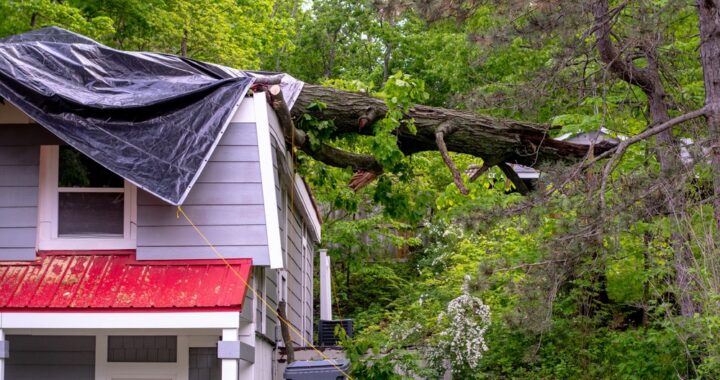
In Vaughan, there was a dispute between neighboring landowners. The dispute involved a rotten oak tree that fell onto neighboring property causing significant damage. The issue in the dispute centered on the first elements–whether the owner of the decayed oak tree had a legal duty to remove the oak tree to prevent damage.
The owner of the oak tree claimed it had no legal duty based on Florida appellate courts applying what is known as the Massachusetts rule. But the Massachusetts rule has been applied to healthy trees, that being that if a healthy tree grows over neighboring property and causes damage, the owner will not owe a legal duty because it would not be foreseeable the healthy tree would cause damage to neighboring property.
The Sixth District Court of Appeals held that the Massachusetts rule, even if it applies in Florida, does NOT apply here because this case dealt with a claimed decayed tree and not a healthy tree. Accordingly, the Sixth District concluded that the owner of the oak tree had a legal duty “to exercise reasonable care to prevent the rotten tree on [its property] from causing harm on [its neighbor’s] property.” Vaughan, supra, at *8. Now, the neighbor still needs to prove the other three elements of negligence, but the owner of the oak tree could not get out of the dispute under the argument that it had no legal duty to prevent such damage.
When asserting a negligence claim, make sure you understand the four elements that need to be proven including the first element–legal duty–becomes a question of law for the court to decide.
Please contact David Adelstein at dadelstein@gmail.com or (954) 361-4720 if you have questions or would like more information regarding this article. You can follow David Adelstein on Twitter @DavidAdelstein1.