MAKE SURE YOU UNDERSTAND WHAT TO INCLUDE AND NOT INCLUDE IN A LIEN

If you need a construction lien prepared, please work with a construction counsel in doing so. Don’t use a service that’s going to charge you less but isn’t going to analyze the information or ask you questions based on the information you provide them to include in the lien. You are selling yourself short if you prepare a lien “down and dirty” or “half-assed”. Also, using construction counsel can allow you to assert, if you wanted, an advice of counsel defense in furtherance of defending against the invariable fraudulent lien claim.

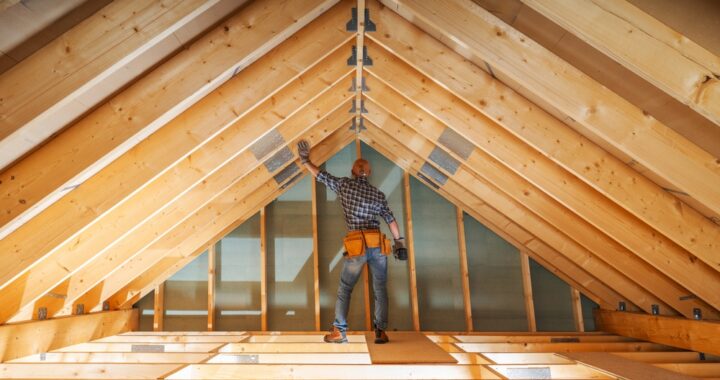
In a recent case, a truss fabricator was hired by an owner to design, manufacture, and deliver trusses. The contract required the owner to pay 50% upon completion of the shop drawings. The shop drawings were prepared but the owner did not make payment. The truss fabricator then liened for the non-payment. The problem was that the property was not improved, i.e., there was no permanent benefit to the property:

Section 713.01(15), Florida Statutes….defines “improvement” as “any building, structure, construction, demolition, excavation, solid-waste removal, landscaping, or any part thereof existing, built, erected, placed, made, or done on land or other real property for its permanent benefit.” Here, no permanent benefit occurred upon the property in this case because the trusses were never delivered. Thus, appellee was not entitled to a lien on the property

JM Properties of W. Palm Beach, Inc. v. Fort Dallas Truss Company, LLC, 51 Fla.L.Weekly D325a (Fla. 4th DCA 2026).

Interestingly, there was no discussion as to whether the trusses were fabricated. Probably not because the shop drawings were not paid for. But if they were, then there would be an argument they are specially fabricated, in which case they should be lienable, and should be identified in the lien as specially fabricated. But since there was no discussion, this was apparently a non-issue in the case.

Bottom line: make sure you understand what to include and not include in a lien.

Please contact David Adelstein at dadelstein@gmail.com or (954) 361-4720 if you have questions or would like more information regarding this article. You can follow David Adelstein on Twitter @DavidAdelstein1.

LIEN RIGHTS FOR SPECIALLY FABRICATED MATERIALS


Specially fabricated materials are those materials that are specially manufactured, designed, or fabricated for a particular project and are not materials that can be universally used on all projects.  Specially fabricated materials have been described as those materials “not generally suited for nor readily adaptable to use in a like improvement.” Odolite Industries, Inc. v. Millman Const. Co., Inc., 501 So.2d 655, 656 (Fla. 3d DCA 1987) (quotation omitted).   For instance, the Florida Supreme Court in Stunkel v. Gazebo Landscaping Design, Inc., 660 So.2d 623, 625 n.2 (Fla. 1995), noted that trees the owner specifically selected for a project were not specially fabricated because they could be used on other projects; whereas, in Lehigh Structural Steel Co. v. Joseph Langer, Inc., 43 So.2d 335, 338 (Fla. 1949), the Court noted that structural steel fabricated for a specific building was specially fabricated materials. (Notably, furnishing specially fabricated materials does not include “design work, submittals, or the like preliminary to actual fabrication of the materials.” Fla. Stat. s. 713.01(13).)


Preserving lien rights under Florida’s Lien Law for specially fabricated materials is different than other materials (or non-specially fabricated materials).


Because specially fabricated materials are specifically fabricated for a particular project, these materials do NOT have to be actually incorporated into the project for the supplier / fabricator to have lien rights. Aquatic Management, Inc. v. Paramount Engineering, Inc., 977 So.2d 600 (Fla. 4th DCA 2007).  If the materials are not specially fabricated, the materials do need to be actually incorporated into the project.  Id.   This is a major difference.


And, because specially fabricated materials do not have to be actually incorporated for a supplier / fabricator to have lien rights for those materials, a notice to owner / intent to look to the payment bond (if there is a payment bond) needs to be served within 45 days from the start of actual fabrication and NOT from when the materials are actually delivered to the job site (since the materials do not actually have to be delivered and incorporated for lien rights for these materials). See Odolite Industries, 501 So.2d at 656; Fla. Stat. 713.01(13). This means that a supplier of specially fabricated materials not in privity with the contractor needs to absolutely serve its notice to owner immediately and no later than 45 days from when fabrication begins.


Also, if the supplier / fabricator is owed money: “Materials specially fabricated at a place other than the site of the improvement for incorporation but not so incorporated and the contract price or value thereof shall be separately stated in the claim of lien.”  Fla. Stat. s. 713.08(1)(c).

Please contact David Adelstein at dadelstein@gmail.com or (954) 361-4720 if you have questions or would like more information regarding this article. You can follow David Adelstein on Twitter @DavidAdelstein1.