CONSTRUCTION LIENS AND THE “SUBSTANTIAL PERFORMANCE” DOCTRINE

In a recent case dealing with a construction lien, the driving issue was whether the air conditioning contractor “substantially performedbefore recording its construction lien against residential property. The importance here pertains to the substantial performance doctrine with respect to construction liens. The Third District Court of Appeal explained, with relevant citations, this doctrine as follows:

Under Florida law, a contractor is entitled to a mechanic’s lien if he complies with all provisions of Chapter 713, governing construction liens, and “has substantially performed the contract.” Grant v. Wester, 679 So. 2d 1301, 1307 (Fla. 1st DCA 1996) (quotation omitted); Langley v. Knowles, 958 So. 2d 1149, 1151 (Fla. 5th DCA 2007) (“The substantial performance doctrine recognizes that a contactor who complies with all of the provisions of the contactor’s lien statute is entitled to enforce a lien if he has substantially, but not completely, performed his contractual obligations.”). Substantial performance is performance “so nearly equivalent to what was bargained for that it would be unreasonable to deny the promisee the full contract price subject to the promisor’s right to recover whatever damages may have been occasioned him by the promisee’s failure to render full performance.” Ocean Ridge Dev. Corp. v. Quality Plastering, Inc., 247 So. 2d 72, 75 (Fla. 4th DCA 1971).

Contactor, LLC v. Allbrite Elec. Contractors, Inc., 780 So. 2d 963, 965 (Fla. 5th DCA 2001) (“[W]hether a subcontractor has substantially performed is a question of fact” and “should not be decided as a matter of law.”); Grant, 679 So. 2d at 1307 (“Substantial performance is a question of fact.”).

Torres v. A&P Air Conditioning Corp., 2026 WL 602664 (Fla.3d DCA 2024).

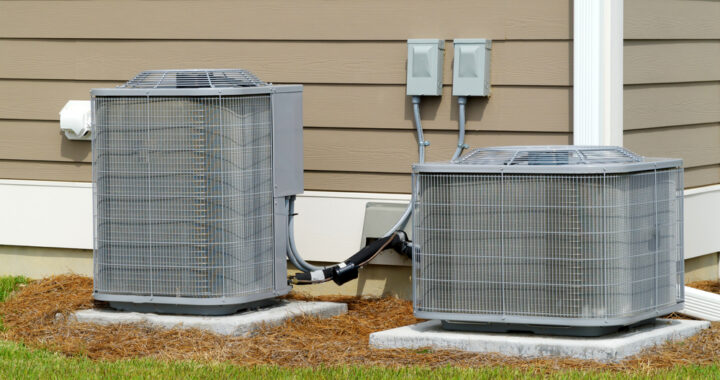
In this case, an owner hired an air conditioning contractor to install two air conditioning units. After the units were installed, the owner claimed one of the units was installed incorrectly and refused to pay the contract balance. The contractor claimed the units passed final inspection and recorded a construction lien. Thereafter, the contractor replaced the unit claimed to be incorrectly installed. The owner argued the lien was premature because the contractor did not “substantially perform” at the time it recorded its construction lien because one of the units was not installed correctly. While the trial court granted summary judgment in favor of the contractor, this was reversed on appeal with a reason being that substantial performance is a question of fact.

If you are recording or defending against a construction lien, please work with construction counsel.

Please contact David Adelstein at dadelstein@gmail.com or (954) 361-4720 if you have questions or would like more information regarding this article. You can follow David Adelstein on Twitter @DavidAdelstein1.


GARDEN VARIETY PAYMENT DISPUTE BETWEEN OWNER AND CONTRACTOR


Payment disputes between owners and contractors are common. The recent case of Hibachi Grill, Inc. v. Arki Construction, Inc., 39 Fla. L. Weekly D954a (Fla. 3d DCA 2014), illustrates two common scenarios that exist in the payment dispute: (1) the contractor claims it is owed the full contract price for substantially performing the work and (2) the owner wants to setoff amounts that it paid directly to subcontractors.


This case turned on the contractor’s approximate $32,000 breach of contract claim against the owner for unpaid contract balance for building out leased space.  Both the owner and contractor agreed that the owner paid approximately $14,000 directly to subcontractors.  The owner argued that this amount should reduce the contractor’s $32,000 claim; however, the trial court entered a judgment for the contract balance that did not include this set-off.   The Third District agreed that the owner’s direct payment to subcontractors should reduce the contractor’s claim; otherwise, the contractor would receive a windfall since it no longer has to pay those subcontractors.


The owner further argued that the contractor’s unpaid contract balance claim should be further reduced by “lost profit” that was included in the contractor’s unpaid contract balance claim.  To support this argument, the owner relied on inapplicable cases where contracts were breached BEFORE substantial performance of the contract was achieved.  However, when the contractor substantially performs, it is entitled the full contract price subject to appropriate deductionsIn the instance case, the deduction was the payment the owner made directly to subcontractors.  In other situations, the owner could deduct deficient work from the contract priceSee, e.g., Wm. Dejon Developers, Inc. v. Panhandle Grading & Paving, Inc., 538 So.2d 88 (Fla. 1st DCA 1989) (deducting from full contract price of roadwork the amount of the contractor’s deficient work); Oven Development Corp. v. Molisky, 278 So.2d 299 (Fla. 1st DCA 1973) (discussing that contractor that substantially performs is entitled to full contract price subject to proper deductions from the owner supported by competent evidence of the contractor’s breaches).


This case would support an owner’s position that it can pay subcontractors directly to reduce the amount owed to the contractor.  In many situations, this is totally acceptable.  The contractor may agree to the payment owed to the subcontractors either through a direct payment or joint check.  In other situations, such as when the subcontractor properly preserved lien rights, the owner may want to preserve its right to pay those subcontractors in consideration of releases of lien to ensure its property does not get liened by the subcontractor.  However, what about the situation where the owner pays a subcontractor that otherwise has no lien rights?  According to this case, the owner could do so to reduce its payment to the contractor since the contractor would owe that money to the subcontractor.  Yet, by the owner doing so, especially if it does so unilaterally, it prevents the contractor from potentially resolving a dispute with the subcontractor that the owner is not fully informed about (and which could include work that formed a basis as to the owner’s dispute with the contractor).  And, it prevents the contractor from negotiating a final payment amount with the subcontractor so that it can, in turn, negotiate a final payment amount with the owner that is less than its contract balance.  So, while this case explains the windfall to the contractor without the deduction for the owner’s direct payment to subcontractors, that windfall may not always be the case.


And, this case demonstrates the importance of how a contractor that substantially performed should present its damages.  A contractor that substantially performs is entitled to the contract price subject to applicable deductions that the owner proves with competent evidence (e.g., deficient work, payment to subcontractors, etc.).

Please contact David Adelstein at dadelstein@gmail.com or (954) 361-4720 if you have questions or would like more information regarding this article. You can follow David Adelstein on Twitter @DavidAdelstein1.