MAKE SURE YOU UNDERSTAND WHAT TO INCLUDE AND NOT INCLUDE IN A LIEN

If you need a construction lien prepared, please work with a construction counsel in doing so. Don’t use a service that’s going to charge you less but isn’t going to analyze the information or ask you questions based on the information you provide them to include in the lien. You are selling yourself short if you prepare a lien “down and dirty” or “half-assed”. Also, using construction counsel can allow you to assert, if you wanted, an advice of counsel defense in furtherance of defending against the invariable fraudulent lien claim.

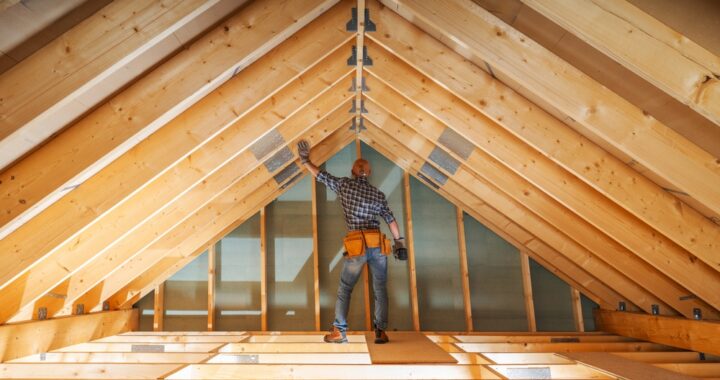
In a recent case, a truss fabricator was hired by an owner to design, manufacture, and deliver trusses. The contract required the owner to pay 50% upon completion of the shop drawings. The shop drawings were prepared but the owner did not make payment. The truss fabricator then liened for the non-payment. The problem was that the property was not improved, i.e., there was no permanent benefit to the property:

Section 713.01(15), Florida Statutes….defines “improvement” as “any building, structure, construction, demolition, excavation, solid-waste removal, landscaping, or any part thereof existing, built, erected, placed, made, or done on land or other real property for its permanent benefit.” Here, no permanent benefit occurred upon the property in this case because the trusses were never delivered. Thus, appellee was not entitled to a lien on the property

JM Properties of W. Palm Beach, Inc. v. Fort Dallas Truss Company, LLC, 51 Fla.L.Weekly D325a (Fla. 4th DCA 2026).

Interestingly, there was no discussion as to whether the trusses were fabricated. Probably not because the shop drawings were not paid for. But if they were, then there would be an argument they are specially fabricated, in which case they should be lienable, and should be identified in the lien as specially fabricated. But since there was no discussion, this was apparently a non-issue in the case.

Bottom line: make sure you understand what to include and not include in a lien.

Please contact David Adelstein at dadelstein@gmail.com or (954) 361-4720 if you have questions or would like more information regarding this article. You can follow David Adelstein on Twitter @DavidAdelstein1.

INCLUDE PROPER (LIENABLE) AMOUNTS IN YOUR CONSTRUCTION LIEN!


Contractors, subcontractors, and suppliers need to appreciate what amounts to actually include in a construction lien before preparing and recording that lien.  Stated differently, contractors, subcontractors, and suppliers need to appreciate what items are lienable and what items are not.  In a nutshell, the item needs to relate to a labor, service, or material constituting an improvement to the real property—the item needs to bestow a permanent benefit on the real property and should be performed under another’s (e.g., general contractor) direct contract with the owner. 


Not every item constitutes an improvement / bestows a permanent benefit to real property

Items that have NOT been found to be properly lienable include without limitation:

  • Extended general conditions / delay damages;
  • Residential cleaning;
  • Maintenance services including landscaping and pool upkeep (see example below);
  • Materials from a supplier not incorporated into property (excluding specially fabricated materials);
  • Lost profit;
  • Expert witness services;
  • Insurance and property tax payments for partially constructed home (see example below);
  • Constructing a removable kiosk at a mall (see example below); and
  • Extras (change order work) not performed in good faith, pursuant to the terms of a contract, within a reasonable time, and were unnecessary to finish a job.


For example, in Palm Beach Mall, Inc. v. Southeast Millwork, Inc., 593 So.2d 1121 (Fla. 4th DCA 1992), a contractor constructed a kiosk in a mall and recorded a lien for unpaid amounts.  The kiosk was not a permanent improvement to the mall, but was removable at the termination of the tenant’s lease.  The Court held that the contractor could not lien for constructing the kiosk.


As another example, in Levin v. Palm Coast Builders and Const. Inc., 840 So.2d 316 (Fla. 4th DCA 2003), a contractor recorded a lien that included costs for lawn maintenance, pool upkeep, utility charges, and association maintenance fees. Not only did the Court hold that these items were not lienable, but affirmed that the lien was fraudulent!


And, as the last example, in Sam Rodgers Properties, Inc. v. Chmura, 61 So.3d 432 (Fla. 2d DCA 2011), discussed in detail in a previous posting, a contractor was building a custom home when a payment dispute arose.  The owner stopped making payments and the contractor ceased construction and recorded a lien.  Subsequently, the contractor performed additional work to protect the unfinished structure from the elements and amended its lien to include these amounts as well as property taxes and insurance the contractor paid on the property.  Regarding the additional work to protect the unfinished structure, the Court held that these amounts were lienable: “All of these items were contemplated by the contract, and all of them were completed in a good faith effort to secure the property and mitigate damages so that a bad situation did not become worse.”  Chmura, 61 So.3d at 439.   But, as it related to the property taxes and insurance, the Court held these items were not lienable as they pertained to the maintenance of the property as opposed to improvement of the property.


By including inappropriate amounts in a lien, a lienor runs the risk of having its lien declared fraudulent under Florida’s Lien Law that would not only render the lien invalid, but expose the lienor to liability.  Do not let this happen to you!

Please contact David Adelstein at dadelstein@gmail.com or (954) 361-4720 if you have questions or would like more information regarding this article. You can follow David Adelstein on Twitter @DavidAdelstein1.